Driving Innovation Forward: USM Teams Showcase Engineering Ingenuity at National Chem-E-Car Competition
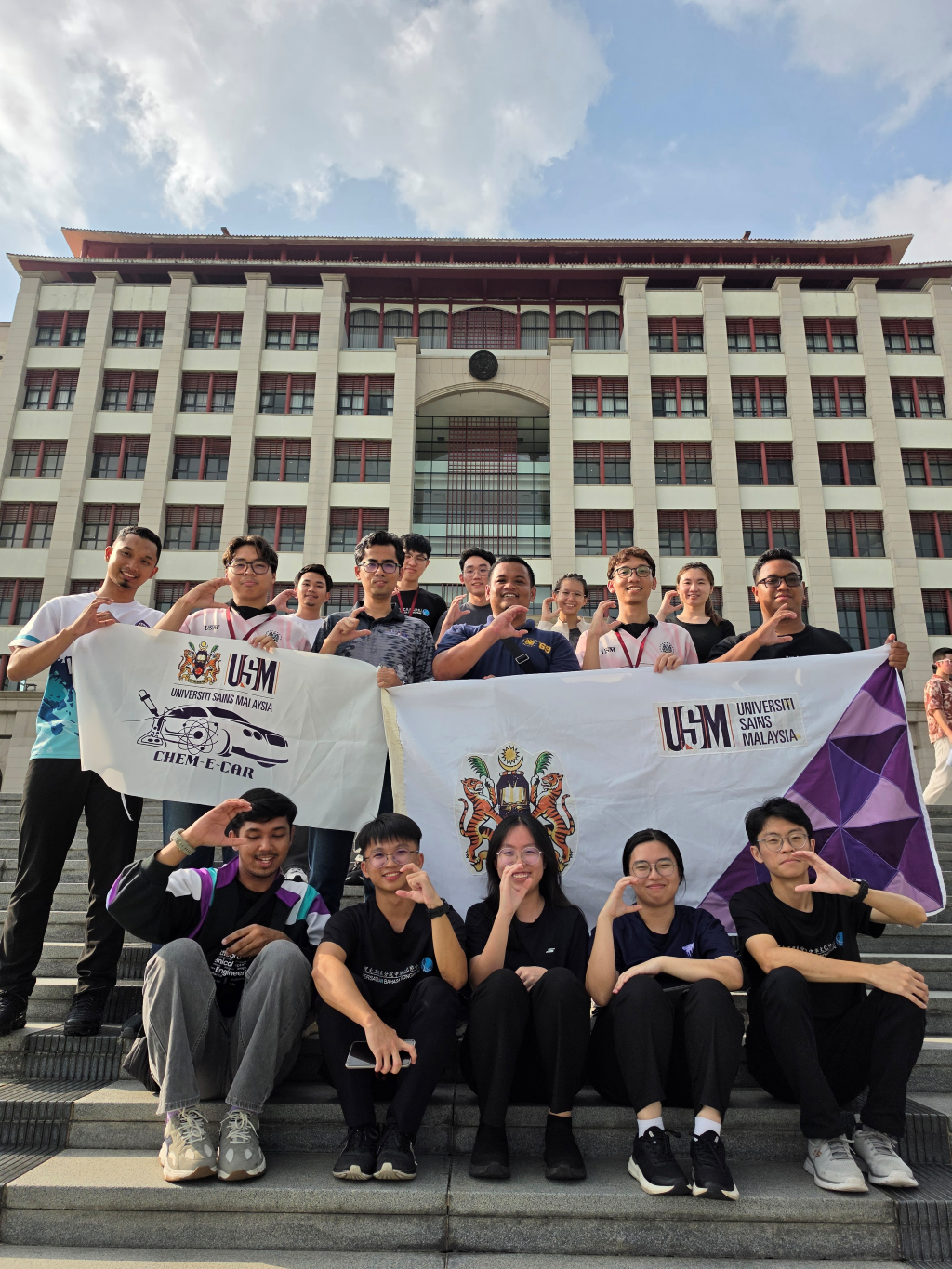
Sepang, 26 April 2026 – Students from the School of Chemical Engineering, Universiti Sains Malaysia (USM) demonstrated strong technical capability and commendable team spirit at the 17th National Chem-E-Car Competition, held on 25–26 April 2026 at Xiamen University Malaysia, Sepang.
The prestigious annual competition was jointly organised by the Chemical Engineering Technical Division (CETD) of the Institution of Engineers, Malaysia (IEM) and Xiamen University Malaysia as the host institution. The event attracted approximately 200 participants from 22 institutions of higher learning, including 15 universities from Malaysia and 7 from Indonesia, making it one of the largest regional gatherings for chemical engineering students.
USM Representation and Participation
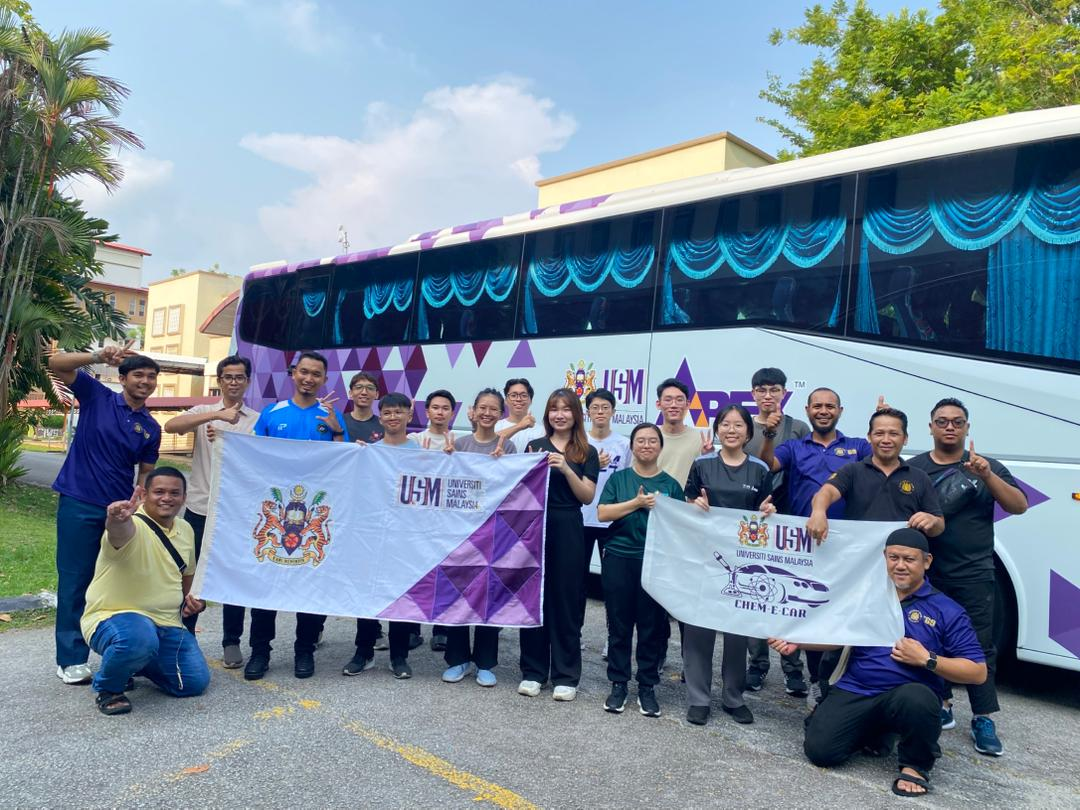
The School of Chemical Engineering, USM was represented by 12 students, forming three teams, who competed alongside peers from across the region. Their participation reflected the School’s commitment to experiential learning and active engagement in national-level engineering competitions.
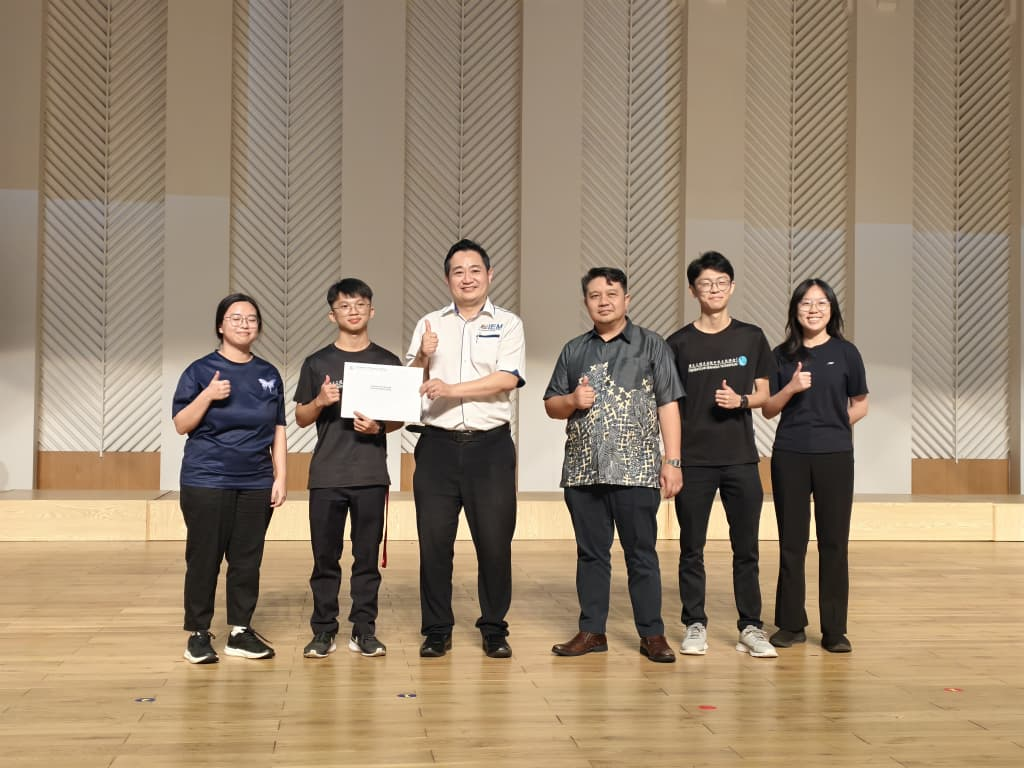
The event was graced by distinguished guests, including Professor Dr. Zhang Ying, Vice-President of Xiamen University Malaysia, Ir. Yau Chau Fong, Deputy President of IEM, and Professor Dr. Chen Bing Hui, Dean of the School of Energy and Chemical Engineering at Xiamen University Malaysia.
A Platform for Applied Chemical Engineering
The Chem-E-Car competition is widely recognised as a high-impact, hands-on engineering challenge, requiring participants to design and construct a shoebox-sized car powered entirely by chemical reactions or innovative mechanisms, without relying on conventional batteries or fuels.
Teams were tasked with developing vehicles capable of carrying a specified load of water over a predetermined distance, striking a target ball, and stopping precisely at a designated point. Performance evaluation was based on multiple criteria, including:
· Accuracy in completing the assigned task
· Creativity and innovation in design
· Integration of chemical engineering principles
· Considerations of safety, environmental impact and operational reliability
The competition effectively integrates core areas of chemical engineering such as reaction engineering, fluid mechanics, process control, and safety, providing students with a unique opportunity to translate theoretical knowledge into practical application.
Resilience and Learning Beyond Results
Although the USM teams did not secure a podium finish this year, their dedication, perseverance, and competitive spirit were highly commendable. The experience gained through participation in such a demanding and multidisciplinary competition is invaluable, contributing significantly to students’ professional and technical development.
Text By : Dr. Fadzil Noor Gonawan
The prestigious annual competition was jointly organised by the Chemical Engineering Technical Division (CETD) of the Institution of Engineers, Malaysia (IEM) and Xiamen University Malaysia as the host institution. The event attracted approximately 200 participants from 22 institutions of higher learning, including 15 universities from Malaysia and 7 from Indonesia, making it one of the largest regional gatherings for chemical engineering students.
USM Representation and Participation
The School of Chemical Engineering, USM was represented by 12 students, forming three teams, who competed alongside peers from across the region. Their participation reflected the School’s commitment to experiential learning and active engagement in national-level engineering competitions.
The event was graced by distinguished guests, including Professor Dr. Zhang Ying, Vice-President of Xiamen University Malaysia, Ir. Yau Chau Fong, Deputy President of IEM, and Professor Dr. Chen Bing Hui, Dean of the School of Energy and Chemical Engineering at Xiamen University Malaysia.
A Platform for Applied Chemical Engineering
The Chem-E-Car competition is widely recognised as a high-impact, hands-on engineering challenge, requiring participants to design and construct a shoebox-sized car powered entirely by chemical reactions or innovative mechanisms, without relying on conventional batteries or fuels.
Teams were tasked with developing vehicles capable of carrying a specified load of water over a predetermined distance, striking a target ball, and stopping precisely at a designated point. Performance evaluation was based on multiple criteria, including:
· Accuracy in completing the assigned task
· Creativity and innovation in design
· Integration of chemical engineering principles
· Considerations of safety, environmental impact and operational reliability
The competition effectively integrates core areas of chemical engineering such as reaction engineering, fluid mechanics, process control, and safety, providing students with a unique opportunity to translate theoretical knowledge into practical application.
Resilience and Learning Beyond Results
Although the USM teams did not secure a podium finish this year, their dedication, perseverance, and competitive spirit were highly commendable. The experience gained through participation in such a demanding and multidisciplinary competition is invaluable, contributing significantly to students’ professional and technical development.
Text By : Dr. Fadzil Noor Gonawan