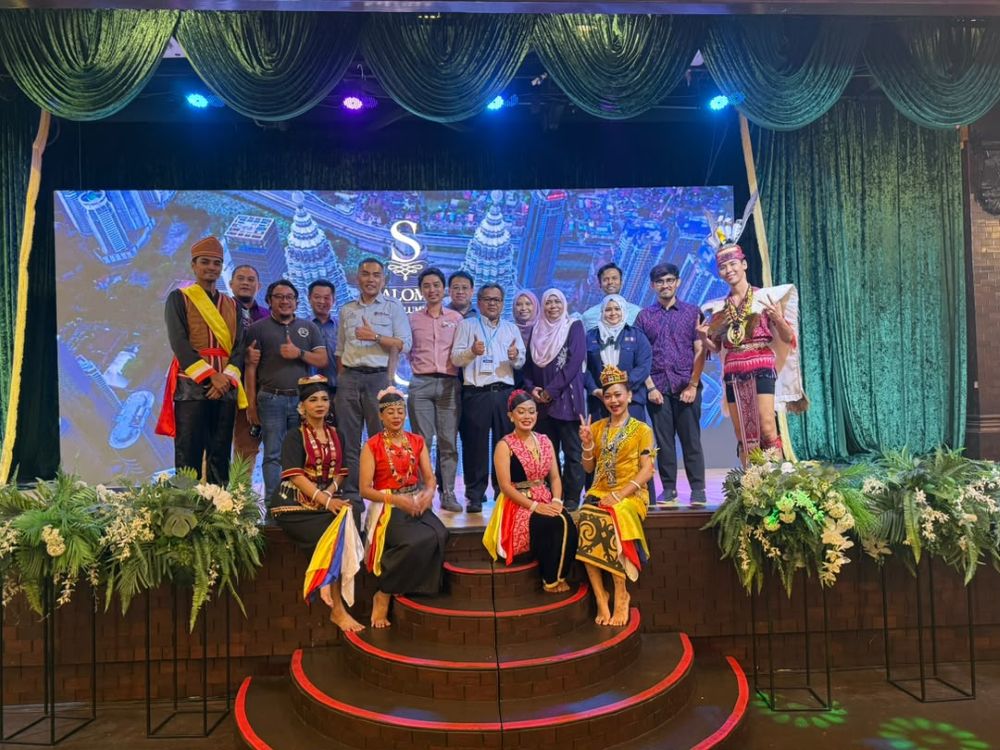
USM Chemical Engineering Wins Gold Medal and Special Award for Innovative Ammonia Removal Technology at NextWave Innovation Awards 2026
20–21 October 2026 – The School of Chemical Engineering, Universiti Sains Malaysia (USM), celebrates the achievement of Professor Dr. Suzylawati Ismail and her research team, who received a Special Award and Gold Medal at the NextWave Innovation Awards 2026, held in conjunction with the 10th Water Loss Asia 2026 at the World Trade Centre Kuala Lumpur (WTCKL).
The team was recognised for its innovative project entitled “Hybrid Zeolite-ZwitAd: Modular Ammonia Removal for Cleaner Water”, which presents a compact, low-energy solution designed to improve treated wastewater quality. The recognition highlights the potential of the team's research to support more effective wastewater treatment and contribute to sustainable water management.
A Research Team Advancing Cleaner Water Technology
The award-winning project was developed by a team led by Professor Dr. Suzylawati Ismail together with her dedicated members; Dr. Muhammad Sharafee Shamsudin and Mr. Muhammad Daniel Shahputra Mohd Desa
Their innovation addresses the challenge of removing ammoniacal nitrogen from treated wastewater through an integrated system that combines two complementary treatment mechanisms: zeolite ion exchange and ZwitAd adsorption technology.
The project reflects the team's efforts to develop practical treatment solutions that can improve effluent quality while offering flexibility for implementation in existing wastewater treatment facilities.
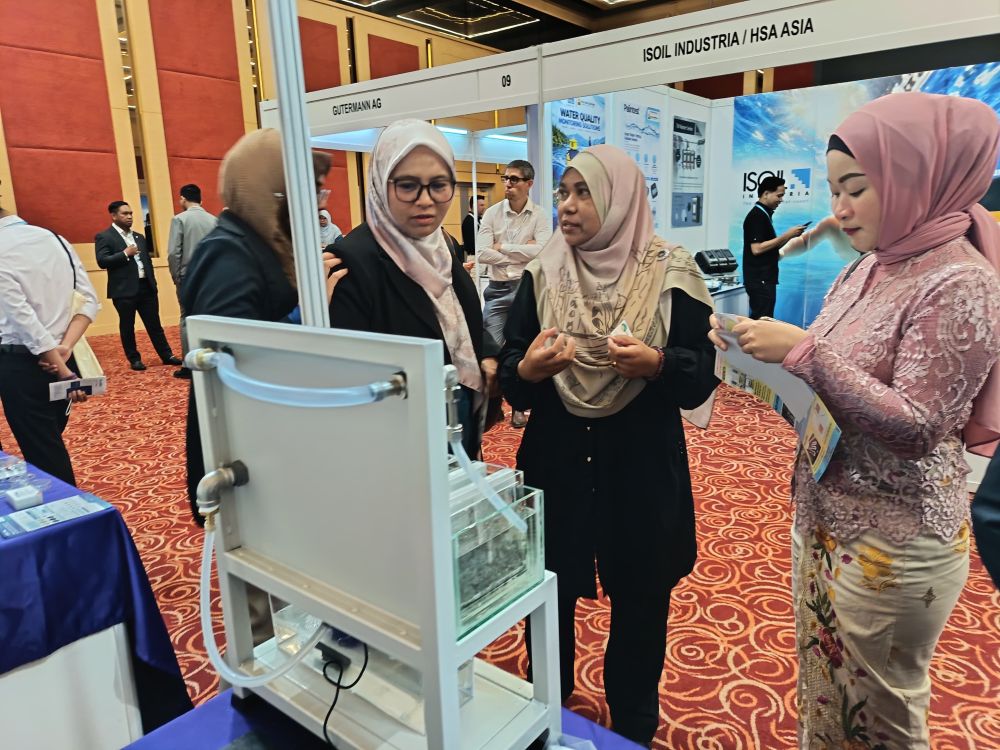
Hybrid Zeolite-ZwitAd: Combining Two Treatment Mechanisms
The Hybrid Zeolite-ZwitAd system integrates zeolite ion exchange, which captures ammonium ions, with a rotating ZwitAd adsorption module. The rotation enhances contact between the water and adsorbent, supporting improved mass transfer and treatment performance.
By combining these mechanisms within a single treatment system, the technology is designed to provide an additional polishing step for treated wastewater. Its compact configuration and low-energy approach offer a potential option for improving effluent quality without requiring extensive changes to existing treatment infrastructure.
Modular Design for Practical Wastewater Treatment
One of the key features of the innovation is its plug-and-play modular design, which incorporates replaceable zeolite cassettes. This configuration allows the system to be installed or retrofitted into existing sewage treatment plants (STPs) with minimal infrastructure modifications.
The modular arrangement offers operational flexibility and simplifies the replacement of treatment components when required. By developing a system that can be integrated into existing facilities, the team aims to make advanced wastewater polishing more accessible and practical for real-world applications.
Validated Performance for Improved Effluent Quality
The system was evaluated through validation testing using real wastewater, demonstrating its potential for practical application beyond laboratory-scale investigations.
The results showed an ammoniacal nitrogen removal efficiency of 60.55%, with the treated effluent meeting the Department of Environment (DOE) Standard A requirement of below 10 mg/L for ammoniacal nitrogen.
These findings demonstrate the system's potential to improve treated wastewater quality and support compliance with relevant effluent requirements. The successful validation using real wastewater also provides an important foundation for further development and assessment of the technology under different operating conditions.
Recognition for Innovation and Sustainable Water Management
Receiving both a Special Award and a Gold Medal at the NextWave Innovation Awards 2026 marks an important achievement for Professor Suzylawati and her research team. The recognition highlights the relevance of their work in developing innovative approaches to wastewater treatment and addressing environmental challenges through engineering solutions.
The project also aligns with broader efforts to promote responsible water management, improve wastewater quality, and advance more sustainable treatment technologies. Its modular design and use of replaceable components further demonstrate the value of developing solutions that can be adapted to existing infrastructure.
Engineering a Cleaner and More Sustainable Water Future
The School of Chemical Engineering congratulates Professor Dr. Suzylawati Ismail, Dr. Muhammad Sharafee Shamsudin, and Mr. Muhammad Daniel Shahputra Mohd Desa on this outstanding achievement. Their success reflects the School's commitment to research excellence, technological innovation, and the development of practical solutions to environmental challenges.
Moving forward, further development, optimisation, and implementation studies could help establish the technology's suitability for wider wastewater treatment applications. The team’s achievement serves as an inspiration for researchers and students to transform scientific ideas into practical innovations that benefit industry, communities, and the environment. Together, let us continue advancing cleaner water technologies and building a more sustainable future through engineering innovation.
Text: MHU
Photos: SI